Lentils in a rice cooker with ginger-scallion dressing
Cook brown or green lentils in a rice cooker with a 2:1 water ratio, clear texture checks and a bright ginger-scallion sesame finish.
Recipe draft · Not yet kitchen-tested. How we develop recipes.
Lentils in a rice cooker with ginger-scallion dressing
- Prep
- 10 min
- Cook / rest
- 40 min
- Total
- 50 min
- Serves
- 4
Ingredients
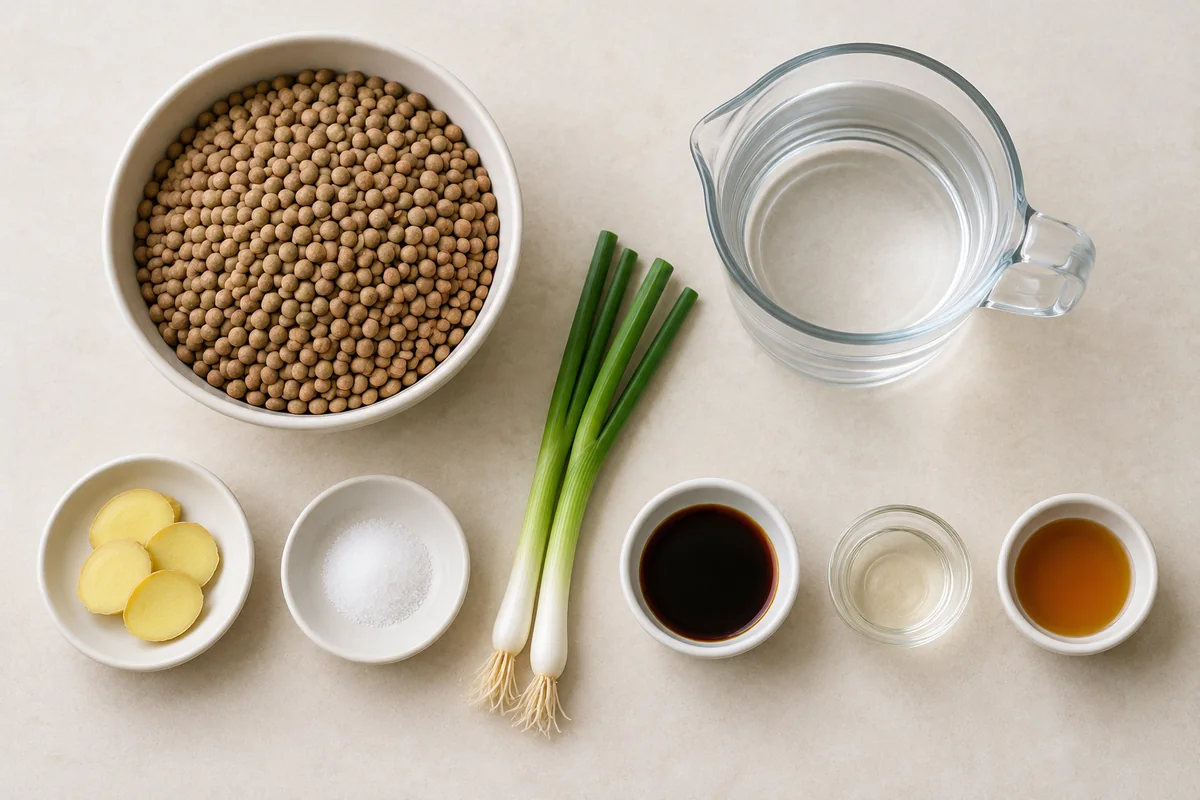
Use the listed quantities. This recipe uses a standard 240 ml US cup for rice and liquid. Spoon measurements are standard measuring spoons.
Method
- Read the lentil package and rice cooker manual before starting. Use this method only if the manual permits dried lentils, pulses or an equivalent grain cycle, and keep the batch below its stated limit. Do not substitute a pressure-cooker program. Sort the lentils on a light plate, discarding stones or damaged pieces.
- Rinse the lentils under cool running water in a small-grain colander or fine-mesh strainer, then drain well. Put them in the inner pot with 2 cups water, the ginger, scallion whites and ¼ teaspoon salt. Stir once and level the lentils; the liquid should sit above them with ample empty space above for bubbling.
- Close the lid and select the manufacturer-approved grain or regular cycle. Set an external timer for 25 minutes. If your manual says not to open the lid during a cycle, wait for the program to finish instead. At the first permitted check, open the lid carefully with your face away from the steam and stir once with a non-scratching paddle.
- Taste two or three lentils. They are done when creamy inside and easy to flatten between the tongue and roof of the mouth, while still holding their shape. Most brown or green lentils need about 30–35 minutes; older lentils may take longer. If they are firm and the pot is nearly dry, add hot water 2 tablespoons at a time, up to ¼ cup, and continue only as the cooker manual allows. Never serve crunchy or chalky lentils.
- When tender, switch off the cooker and rest the lentils for 5 minutes. Remove the ginger. If more than a few spoonfuls of water remain, drain the lentils carefully; do not keep cooking tender lentils just to evaporate it. Combine soy sauce, rice vinegar, sesame oil and the remaining ¼ teaspoon salt, then fold the dressing and scallion greens through the warm lentils. Taste and serve warm or at room temperature within the safe holding window.
Equipment that helps
A rice cooker whose manual permits dried lentils or pulses, a light plate for sorting, a small-grain colander or fine-mesh strainer, a standard 240 ml US dry measuring cup, a liquid measuring cup and a non-scratching paddle.
The OXO Good Grips Rice & Grains Washing Colander Sponsored has small square holes and a draining pour spout, which makes it useful for sorting, rinsing and draining this one-cup lentil batch in one vessel. It does not make an incompatible rice cooker suitable for lentils, and very small debris still needs a visual check. A fine-mesh strainer you already own works too.
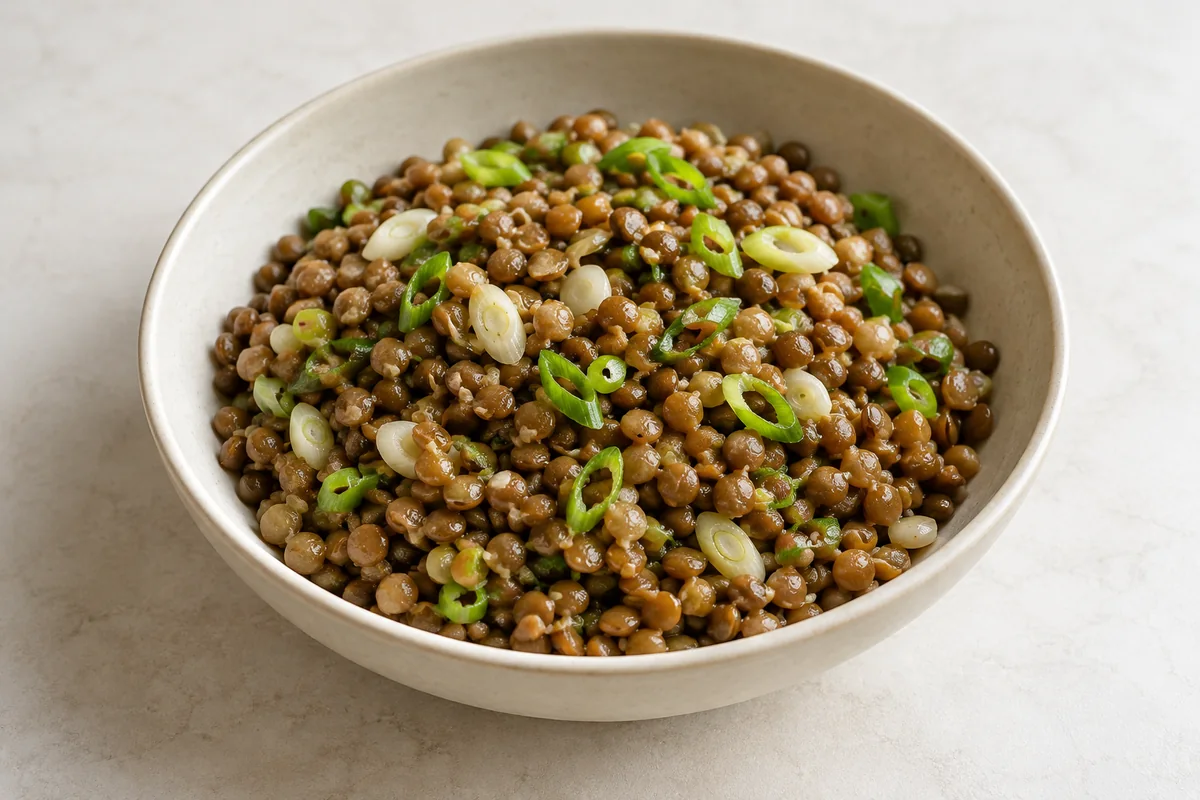
Cooking notes & substitutions
Yes, you can cook brown or green lentils in a rice cooker when its manual permits dried pulses or an equivalent grain cycle. Start with 1 cup lentils and 2 cups water, check the texture from 25 minutes and expect about 30–35 minutes plus a short rest. This ginger-scallion version stays separate enough for bowls and salads. It has been reviewed against cooking guidance but has not been kitchen-tested, so your cooker manual and the lentil package take priority.
Food-safety references
- Lentils.org: rinse, simmer and serve cooking framework
- A Peachy Plate: rice-cooker lentil ratio, varieties and timing reference
- The Herbeevore: 2:1 rice-cooker ratio and staged doneness checks
- FoodSafety.gov: storing and reheating leftovers
Brown, green and red lentils
Brown and standard green lentils are whole lentils that usually hold their shape in this timing. French green or black lentils can need longer and have not been kitchen-tested here. Split red or yellow lentils soften much faster and can turn creamy; use a method written for that texture instead of substituting them one-for-one.
If the cooker switches to warm too soon
Taste before restarting anything. If the lentils are firm and the pot is dry, add 2 tablespoons hot water and use only a continuation method permitted by the manual. Repeatedly forcing a basic switch cooker back to cook is not a universal fix. If the manual does not cover lentils or other pulses, finish gently on the stovetop instead.
Too firm or too soft
Older lentils can take longer to soften. Acidic ingredients may also slow softening, which is why the vinegar and soy dressing goes in after cooking. For firmer salad lentils, check at the early end and drain promptly; for bowls, let them become fully tender but not split. Record the time that works for your lentil brand and cooker.
Seasoning substitutions
Tamari can replace soy sauce; check its label if avoiding gluten. Apple cider vinegar can replace rice vinegar. For sesame-free lentils, omit sesame oil and add 1 teaspoon neutral or olive oil instead. If using salted broth in place of water, omit the cooking salt and avoid a delayed start.
Storage and reheating
Refrigerate leftovers in shallow covered containers within 2 hours, or within 1 hour above 90°F / 32°C. Keep at 40°F / 4°C or colder and use within 3–4 days. Reheat only the portion needed to 165°F / 74°C, adding a spoonful of water if the lentils seem dry.
Timing and yield
The listed 50 minutes is 10 minutes prep plus a 40-minute cooking allowance that includes the 5-minute rest. One cup dry lentils makes roughly 2½ cups cooked, or four side servings. A longer cooker cycle or an extra-water correction increases the total time.
Questions before you cook
Do lentils need to be soaked before cooking in a rice cooker?
No. Brown and green lentils do not need soaking for this method. Sort and rinse them, then cook with the measured water. Soaked lentils would need different timing and liquid and have not been kitchen-tested here.
Leftovers & food safety
Refrigerate leftovers promptly in shallow containers. Do not leave cooked food at room temperature for more than 2 hours, or 1 hour above 90°F / 32°C. Reheat leftovers to 165°F / 74°C. Follow package instructions and use a thermometer where appropriate. USDA leftover guidance.
Serve with or try next
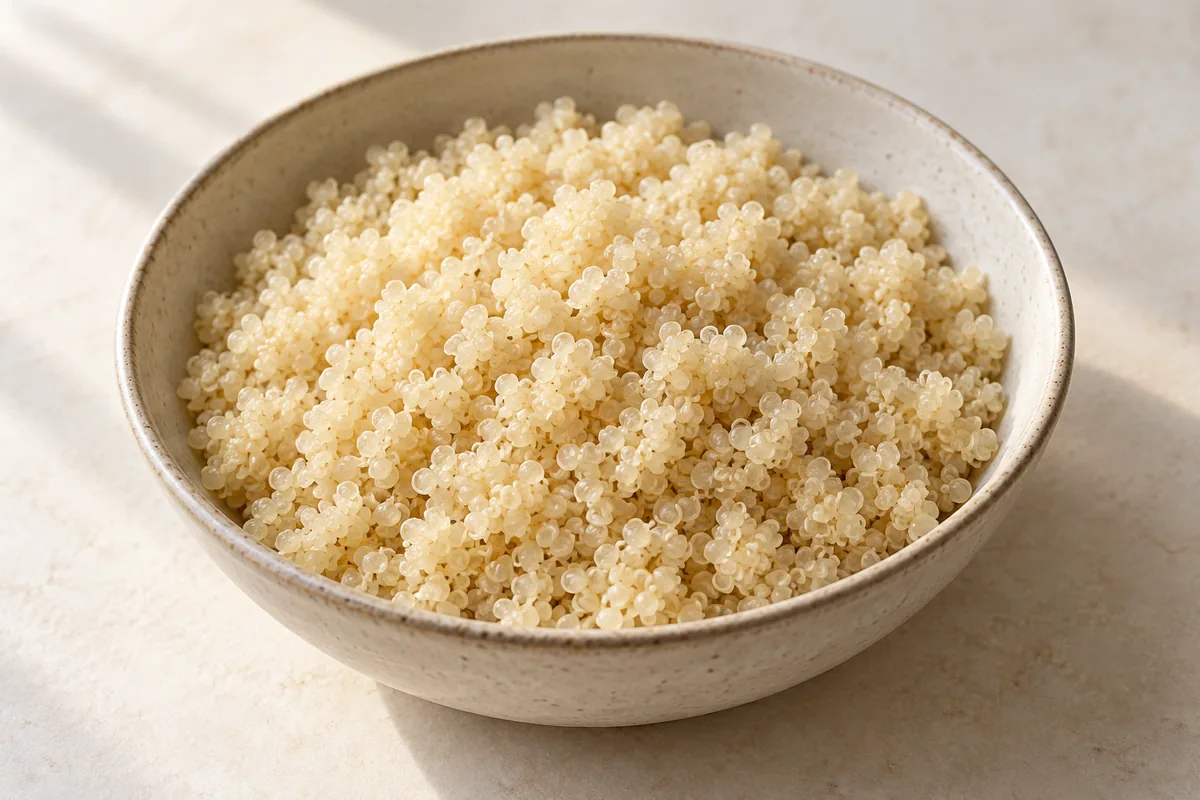
How to cook quinoa in a rice cooker
Cook quinoa in a rice cooker with 1 standard US cup quinoa and 1¾ cups water, then rest for 10 minutes before fluffing.
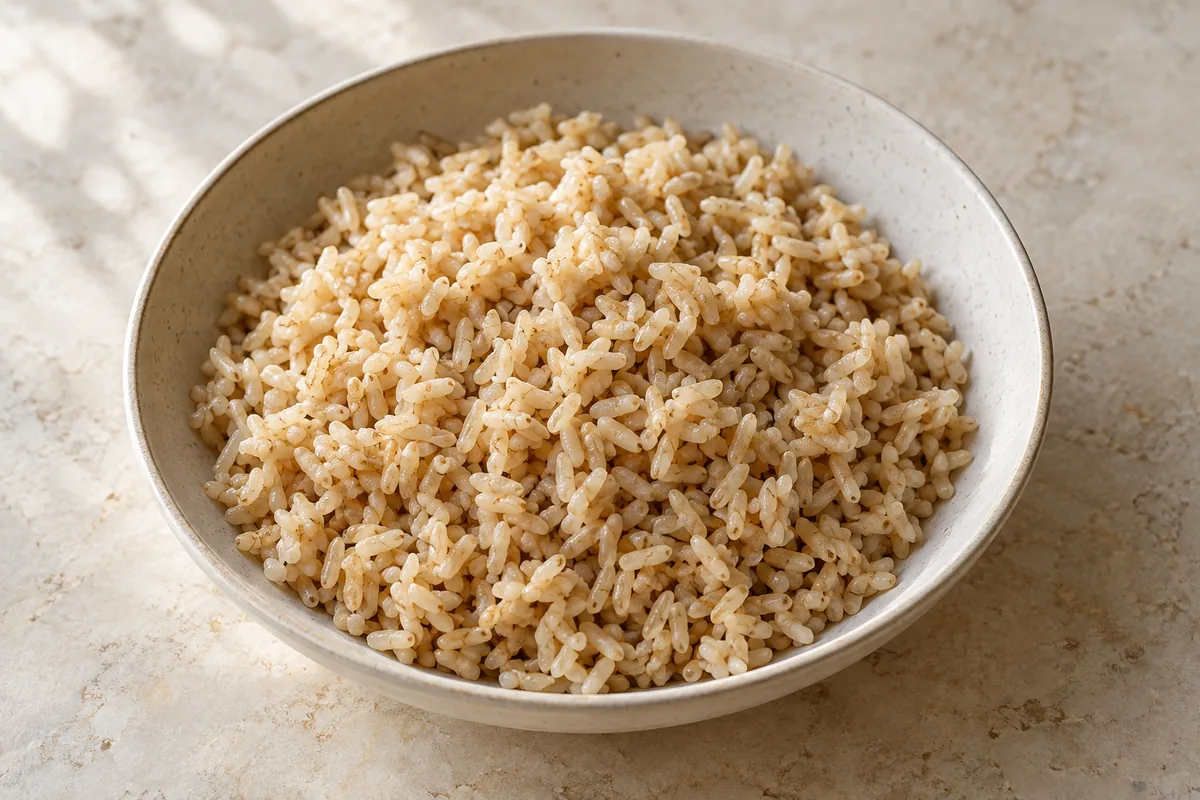
Brown rice in a rice cooker
A straightforward brown-rice method with the correct program, resting time, and fixes for firm or wet grains.
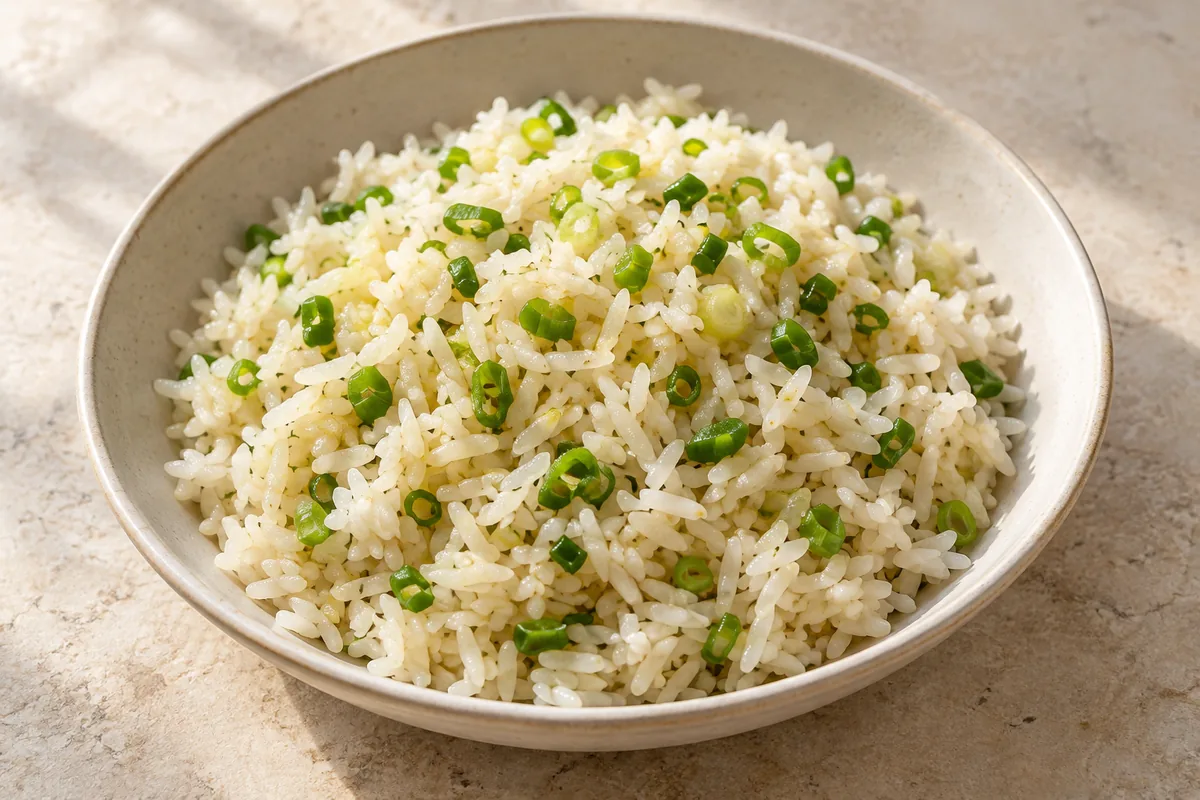
Rice cooker ginger scallion rice
Fragrant jasmine rice with fresh ginger and scallion oil, made with a rice cooker and a small pan.