Rice cooker congee with ginger and scallion
Make rice cooker congee with ½ supplied cup of short-grain white rice, the matching PORRIDGE water line and a dedicated porridge program.
Recipe draft · Not yet kitchen-tested. How we develop recipes.
Rice cooker congee with ginger and scallion
- Prep
- 10 min
- Cook / rest
- 65 min
- Total
- 75 min
- Serves
- 3
Ingredients
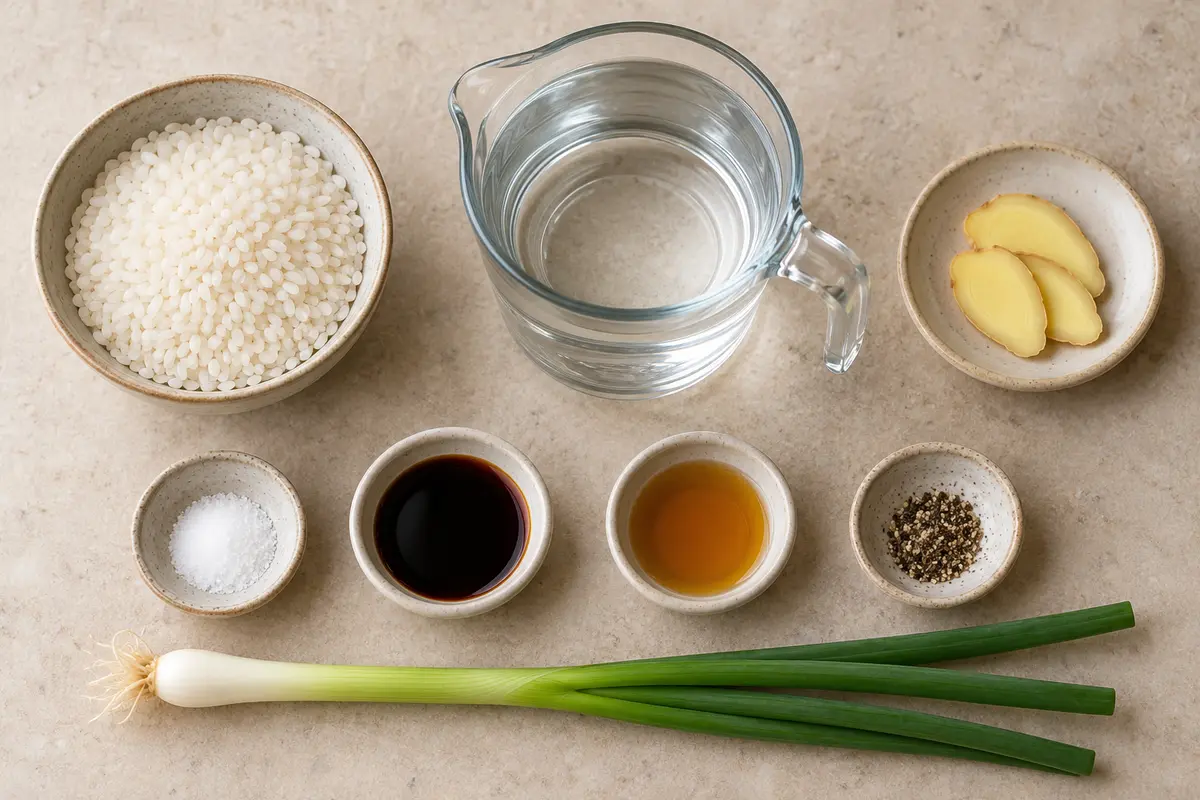
Use the listed quantities. Rice-cooker cups are 180 ml; Spoon measurements are standard measuring spoons.
Method
- Read the rice cooker manual before measuring. Continue only if it expressly permits white-rice porridge or congee and provides a dedicated program, quantity and water line. The Zojirushi NS-TSC10/18 accepts 0.5–1.5 supplied cups on PORRIDGE in the 1.0 L model; this recipe uses its minimum. Do not use a white-rice, quick-cook or basic one-switch cycle.
- Measure ½ cup with the cooker’s supplied 180 ml rice cup, not a standard US cup. Rinse the rice in cool water, stirring gently with your fingers, then drain well. Put the rice in the inner pot and level it. Add cool water exactly to the PORRIDGE 0.5 line; the line is read only after the rice is in the pot.
- Lay the three ginger slices on top of the rice and water without stirring. Fit the clean inner lid and steam vent as the manual directs. Select PORRIDGE and start the cycle. The documented NS-TSC10/18 cycle takes about 55–65 minutes; use the full automatic program rather than opening the lid to check early.
- When the cycle ends, open the lid away from your face. Remove the ginger slices. Stir thoroughly from the bottom, pressing a few soft grains against the side with the paddle. The congee should be loose and creamy, with swollen grains that break easily and no hard centers or separate pool of clear water.
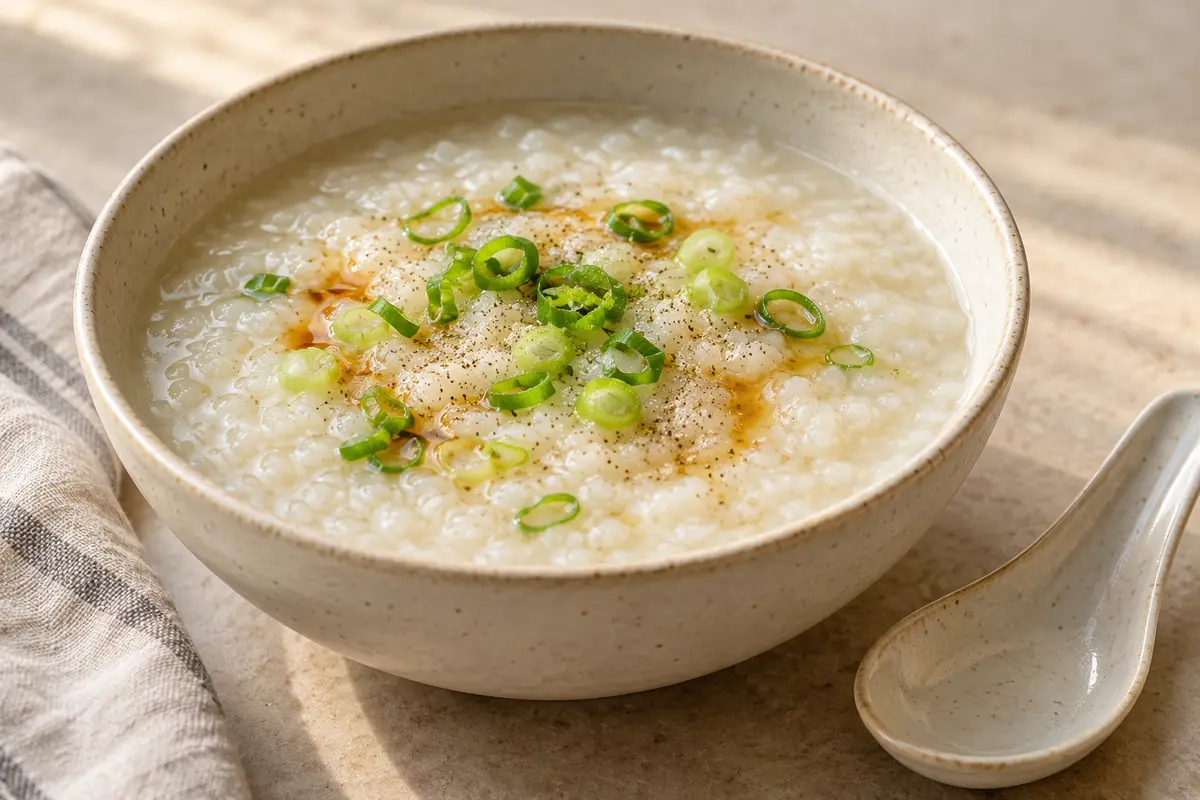
- Stir in the salt, then rest uncovered for 3–5 minutes. Divide among bowls and finish the full batch with the soy sauce, sesame oil, scallion and black pepper. Taste before adding more salt because the soy sauce supplies seasoning. Serve while the congee is fluid; it thickens as it stands.
Equipment that helps
A rice cooker whose manual provides a dedicated white-rice porridge or congee program and water line, its supplied 180 ml rice cup, a fine-mesh strainer, measuring spoons and a non-scratching rice paddle.
The Zojirushi NS-TSC10 rice cooker Sponsored is a precise fit for this method because its manual documents a PORRIDGE program, a 0.5 supplied-cup minimum for the 1.0 L model and the matching inner-pot line. Its 5.5-cup headline capacity refers to raw white rice, not the porridge maximum, and it is a 120-volt US model. A cooker you already own is sufficient when its own manual provides equivalent porridge instructions.
Cooking notes & substitutions
For rice cooker congee, measure ½ of the cooker’s supplied 180 ml rice cup of short-grain white rice, add water to the matching PORRIDGE 0.5 line, and run the dedicated PORRIDGE program. This small batch follows the documented Zojirushi NS-TSC10/18 method; another cooker needs its own manual-approved rice quantity and porridge line. Ginger cooks on top, while salt, soy sauce, sesame oil, scallion and pepper go in after the cycle so the measured cooking liquid stays accurate. The method has been reviewed against manufacturer guidance but has not been kitchen-tested.
Food-safety references
- Zojirushi: NS-TSC10/18 model, supplied cup and porridge program
- Zojirushi: NS-TSC10/18 operating instructions
- The Kitchn: basic congee texture and finishing guidance
- FoodSafety.gov: storing and reheating leftovers
- FoodSafety.gov: safe chilling
Use the labeled porridge line
A supplied rice cup is about 180 ml, not a 240 ml US cup, and the pot line accounts for both rice and water. Do not convert the PORRIDGE line into a guessed cup ratio. On another model, use its manual’s minimum batch and matching line; if no porridge or congee method is documented, make congee on the stovetop instead.
Fix the texture after cooking
For thinner congee, stir in boiling water 1 tablespoon at a time after the cycle. For thicker congee, leave it uncovered for another 2–3 minutes. Do not add extra rice or exceed the marked line during cooking in an attempt to change the texture.
Prevent vent overflow
Rinse and drain the rice, stay within the porridge capacity, keep the steam vent clean and use only the specified program. Stop the cooker and follow its safety instructions if liquid reaches the vent; keep your face and hands away from escaping steam.
Seasoning and topping swaps
Tamari can replace the soy sauce one-for-one; use certified gluten-free seasonings if needed. For sesame-free bowls, omit the toasted sesame oil rather than adding it to the cooker. Finely grated fresh ginger can replace the cooked slices only as an after-cooking garnish. These are suggested serving variations, not kitchen-tested substitutions.
Delayed start and Keep Warm
Use a timer only if the appliance manual permits it for plain porridge. Do not leave soy sauce, sesame oil or sliced scallion in the pot on delay. Serve after the cycle rather than holding the seasoned congee for hours; the texture continues to thicken.
Storage and reheating
Cool leftovers promptly in shallow covered containers and refrigerate at 40°F / 4°C or colder for 3–4 days. Reheat only the portion needed with a splash of water until it reaches 165°F / 74°C throughout, stirring so the center heats evenly.
Questions before you cook
Can I make this congee in a one-switch rice cooker?
Not with this method. Congee uses much more water than ordinary rice and can foam into the vent if the appliance is not designed for it. Use a model-specific porridge or congee program, or use a stovetop congee recipe instead.
Leftovers & food safety
Refrigerate leftovers promptly in shallow containers. Do not leave cooked food at room temperature for more than 2 hours, or 1 hour above 90°F / 32°C. Reheat leftovers to 165°F / 74°C. Follow package instructions and use a thermometer where appropriate. USDA leftover guidance.
Serve with or try next
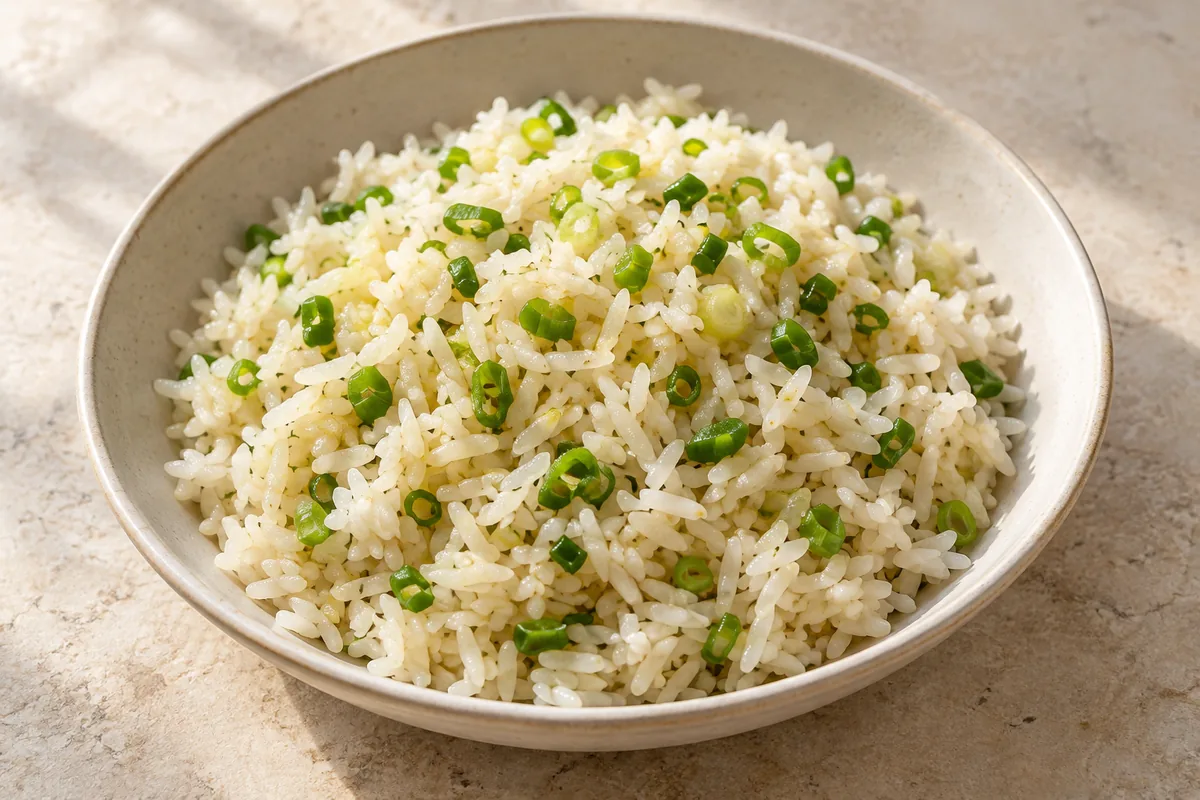
Rice cooker ginger scallion rice
Fragrant jasmine rice with fresh ginger and scallion oil, made with a rice cooker and a small pan.
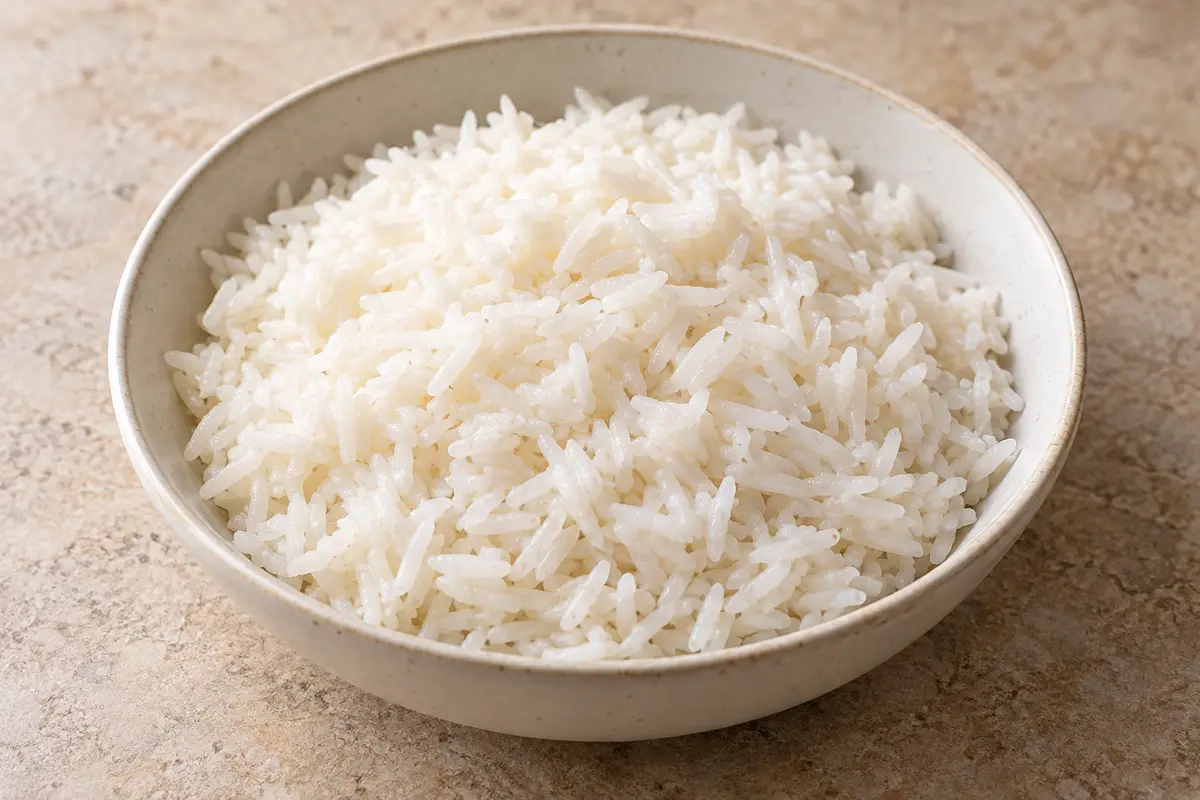
Coconut rice in a rice cooker
Use one standard US cup of jasmine rice, ¾ cup coconut milk and ½ cup water for fluffy rice cooker coconut rice without mixed measuring cups.
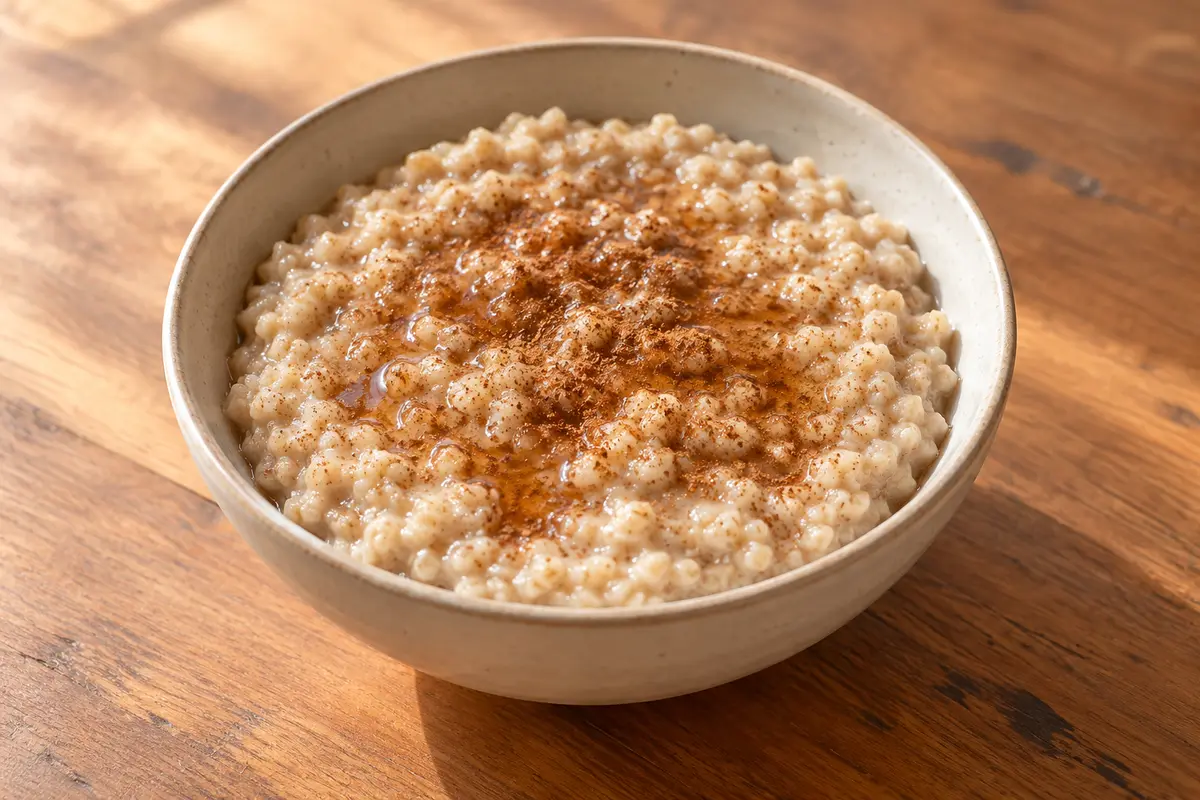
Steel-cut oatmeal in a rice cooker
Make steel-cut oatmeal in a rice cooker with ¾ US cup oats and 1⅞ cups water on a dedicated steel-cut-oatmeal program; stir in milk only after cooking.