Garlic noodles with a glossy soy-butter sauce
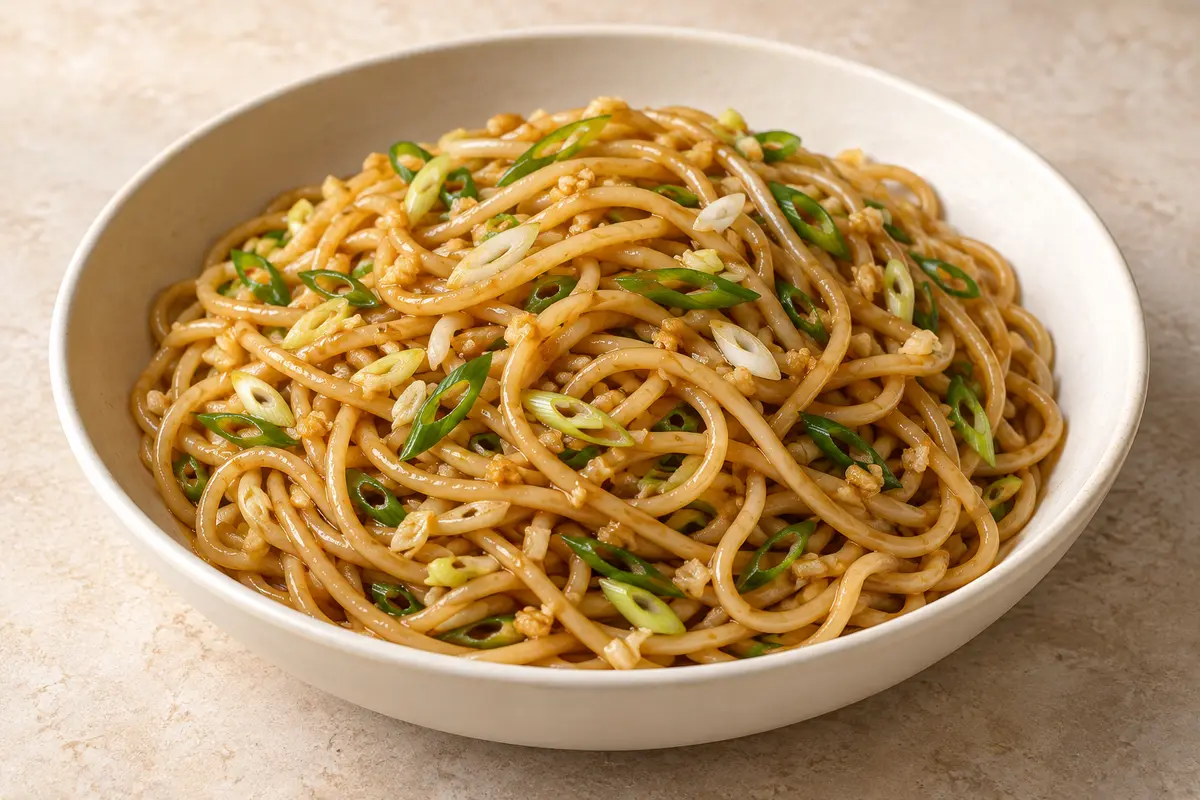
Make garlic noodles by cooking 8 ounces of spaghetti 1 minute shy of tender, then tossing it for 1–2 minutes with pale-gold garlic, butter, soy sauce, oyster sauce and reserved noodle water. Add the water gradually until the sauce is glossy rather than greasy. Allow about 25 minutes including prep.
Recipe draft · Not yet kitchen-tested. How we develop recipes.
Garlic noodles with a glossy soy-butter sauce
- Prep
- 10 min
- Cook / rest
- 15 min
- Total
- 25 min
- Serves
- 3
Ingredients
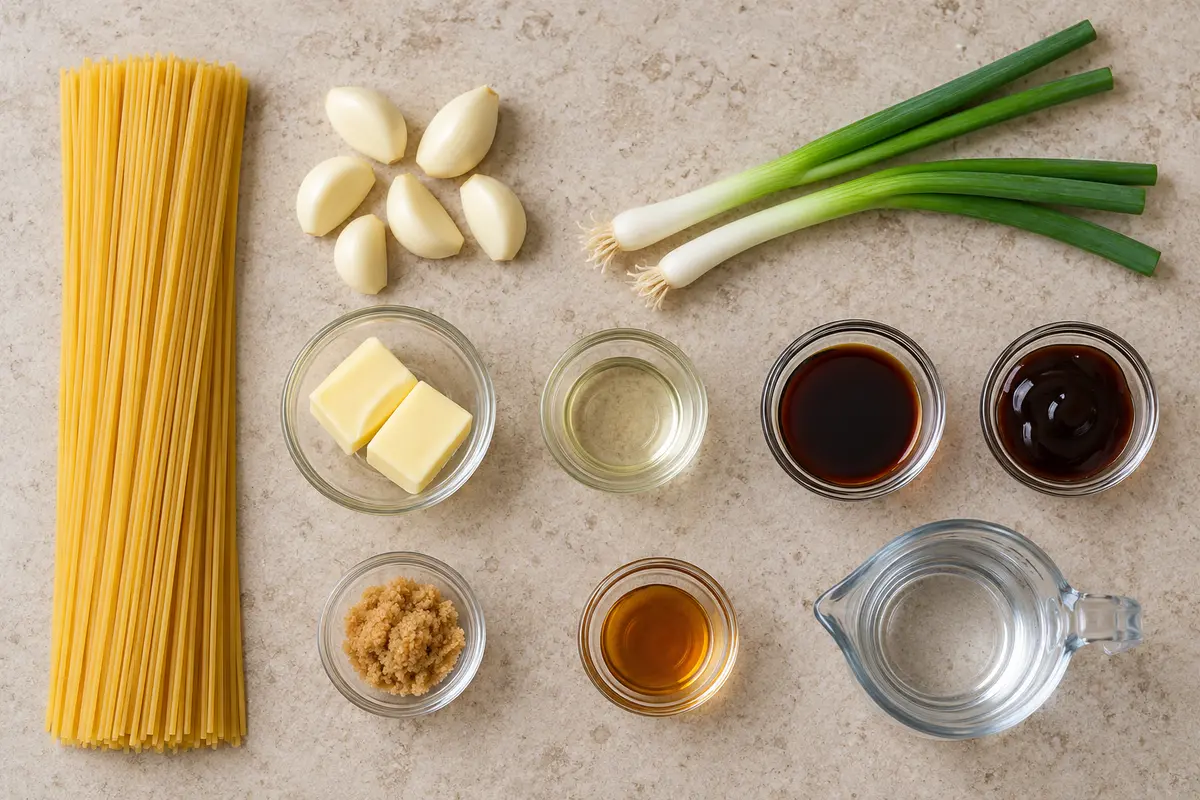
Use the listed quantities. Spoon measurements are standard measuring spoons.
Method
- Bring a large pot of water to a rolling boil. While it heats, mince the garlic, slice the scallions and mix the soy sauce, oyster sauce, brown sugar and toasted sesame oil in a small cup. Keep the scallion greens separate for the finish. Salt the boiling water only as the noodle package directs; the sauce is already salty.
- Add the noodles and stir immediately, then occasionally so they do not stick. Cook for 1 minute less than the package’s tender or al dente time. Before draining, scoop out at least ⅓ cup cooking water. Drain the noodles without rinsing; they should bend easily but retain a slight bite because they will finish in the pan.
- Return a dry 12-inch / 30 cm skillet or flat-bottom wok to medium-low heat. Add the butter and neutral oil. When the butter has melted and its foaming begins to settle, add the garlic and scallion whites. Stir constantly for 60–90 seconds, until fragrant and just pale gold. Reduce the heat or lift the pan off the burner if the garlic colors quickly; do not let it turn dark brown.
- Lower the heat and add the prepared sauce plus 2 tablespoons of the reserved noodle water. It may bubble sharply. Stir for about 15 seconds, then add the drained noodles. Toss and lift for 1–2 minutes, until the noodles are tender, evenly coated and glossy, with no puddle of thin sauce on the bottom.
- If the noodles look dry or the sauce sits oily on the pan, add reserved noodle water 1 tablespoon at a time and keep tossing; the water helps the butter and seasonings form a cohesive coating. Turn off the heat, fold in the scallion greens and serve immediately. The listed 15-minute cooking allowance includes boiling-water and pan time; a slow stove may increase the total.
Equipment that helps
A large pot, a colander, a liquid measuring cup, a small sauce cup, a 12-inch / 30 cm skillet or flat-bottom wok, and tongs or two heat-safe spatulas.
The YOSUKATA 13.5-inch flat-bottom carbon steel wok Sponsored has a 13.5-inch rim, flat base and sloping carbon-steel sides that give this 8-ounce noodle batch room for lifting and tossing. The rim measurement is not the flat cooking-area size, so finish a doubled recipe in two batches. Carbon steel requires seasoning, hand washing and thorough drying; a wide stove-compatible skillet you already own is equally suitable for this moderate-heat sauce.
Cooking notes & substitutions
This garlic noodles recipe coats springy spaghetti in a glossy sauce made with butter, gently cooked garlic, reduced-sodium soy sauce and oyster sauce. Cook the noodles just shy of tender, save their starchy water and finish them in the pan so the sauce clings instead of pooling. Keep the garlic pale gold: dark garlic makes the whole batch bitter. The recipe takes about 25 minutes and has been reviewed for cooking logic, but it has not been kitchen-tested.
Food-safety references
- Barilla: bring water to a rolling boil, follow package time and stir pasta
- The Kitchn: garlic-butter noodles with soy, oyster sauce and reserved cooking water
- The Woks of Life: Asian garlic-noodle technique and sauce pattern
- FoodSafety.gov: storing and reheating leftovers
Prevent bitter garlic
Use medium-low heat and stir continuously. Pale gold is enough because the garlic continues cooking when the sauce and hot noodles arrive. If it becomes dark brown or smells acrid, start the pan sauce again with fresh garlic and fat; extra sugar or soy sauce will not remove the bitterness.
Glossy rather than greasy
Starchy noodle water is the bridge between melted butter and the salty seasonings. Add it gradually while tossing. A dry, oily coating usually needs another tablespoon of water; a thin puddle needs another 30–60 seconds of tossing. Do not pour in all ⅓ cup automatically.
Noodle choices
Dried spaghetti gives a reliable, widely available base. Plain dried lo mein or wheat noodles can work, but package times and salt levels vary; cook to one minute shy of tender and begin with less noodle water. Fresh, alkaline, rice, glass and instant noodles need different preparation and are not direct swaps.
Sauce substitutions
Vegetarian stir-fry sauce can replace oyster sauce. Tamari can replace soy sauce; check labels if avoiding gluten because the noodles and oyster-style sauce may still contain wheat. For dairy-free noodles, use 2 tablespoons of a plant butter suitable for stovetop cooking. Omit sesame oil for sesame-free food and add another ½ teaspoon neutral oil after cooking.
Serving and batch size
This makes three modest main-dish portions or four side portions. Pair it with ginger-garlic bok choy or crispy air-fryer tofu. For six portions, cook the noodles in the same large pot but finish them in two pan batches so the sauce can coat rather than steam a heavy pile.
Storage and reheating
Refrigerate leftovers in a shallow covered container within 2 hours, or within 1 hour above 90°F / 32°C. Keep at 40°F / 4°C or colder and use within 3–4 days. Reheat only the portion needed to 165°F / 74°C in a skillet or microwave, adding 1–2 teaspoons water to loosen the sauce. The noodles will be softer after storage.
Questions before you cook
Can I make garlic noodles without oyster sauce?
Yes. Use the same amount of vegetarian stir-fry sauce for the closest texture and savory flavor. Soy sauce alone is thinner and saltier, so do not replace the oyster sauce with an extra tablespoon of soy sauce without rebalancing the recipe.
Leftovers & food safety
Refrigerate leftovers promptly in shallow containers. Do not leave cooked food at room temperature for more than 2 hours, or 1 hour above 90°F / 32°C. Reheat leftovers to 165°F / 74°C. Follow package instructions and use a thermometer where appropriate. USDA leftover guidance.
Serve with or try next
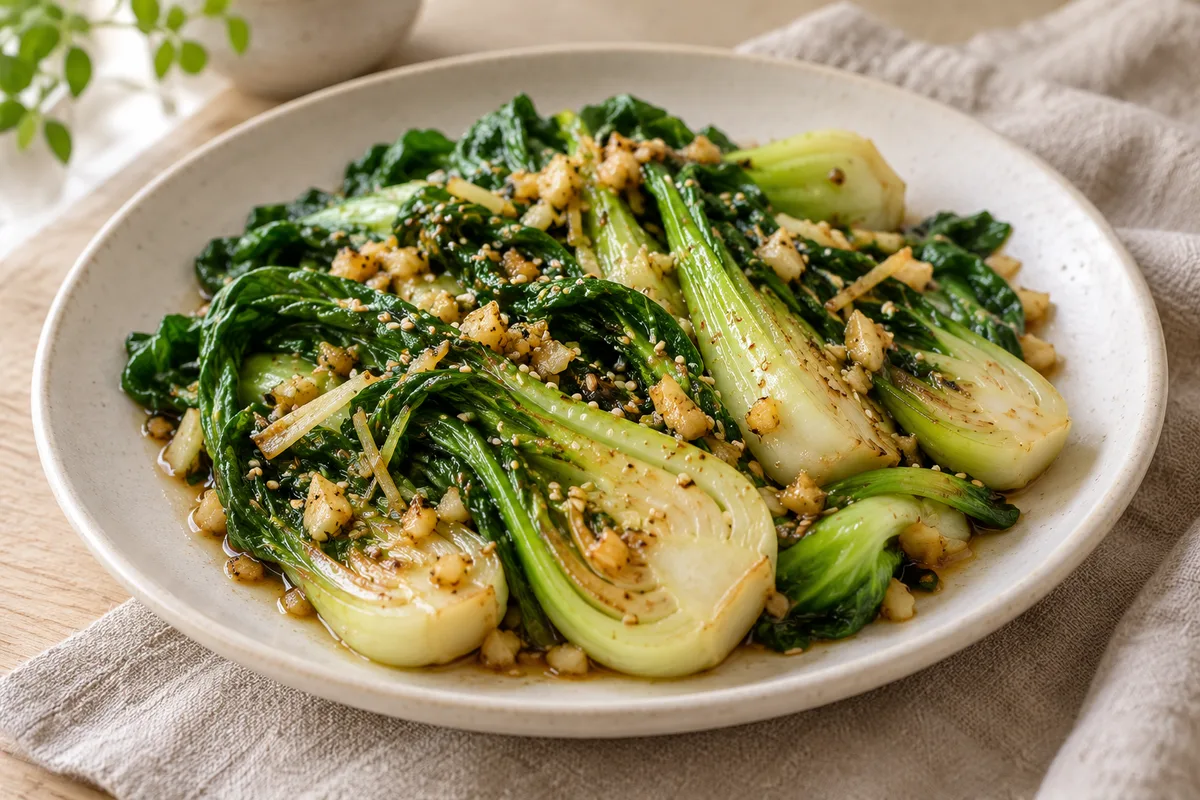
Bok choy stir fry with ginger and garlic
A 15-minute bok choy stir-fry with crisp stems, wilted leaves, ginger, and garlic. A simple side for rice and noodles.
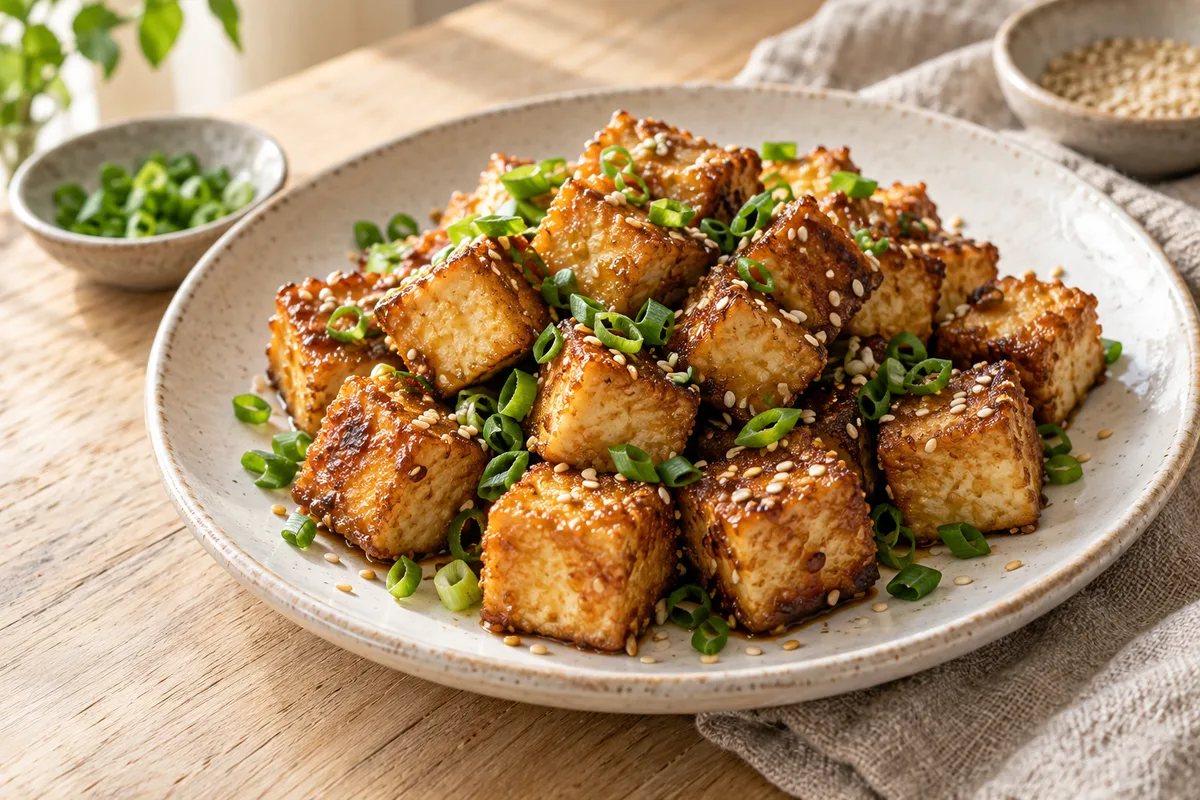
Crispy air fryer tofu
Golden tofu cubes with a light cornstarch crust. Learn when to add the sauce and how to avoid a crowded air fryer basket.
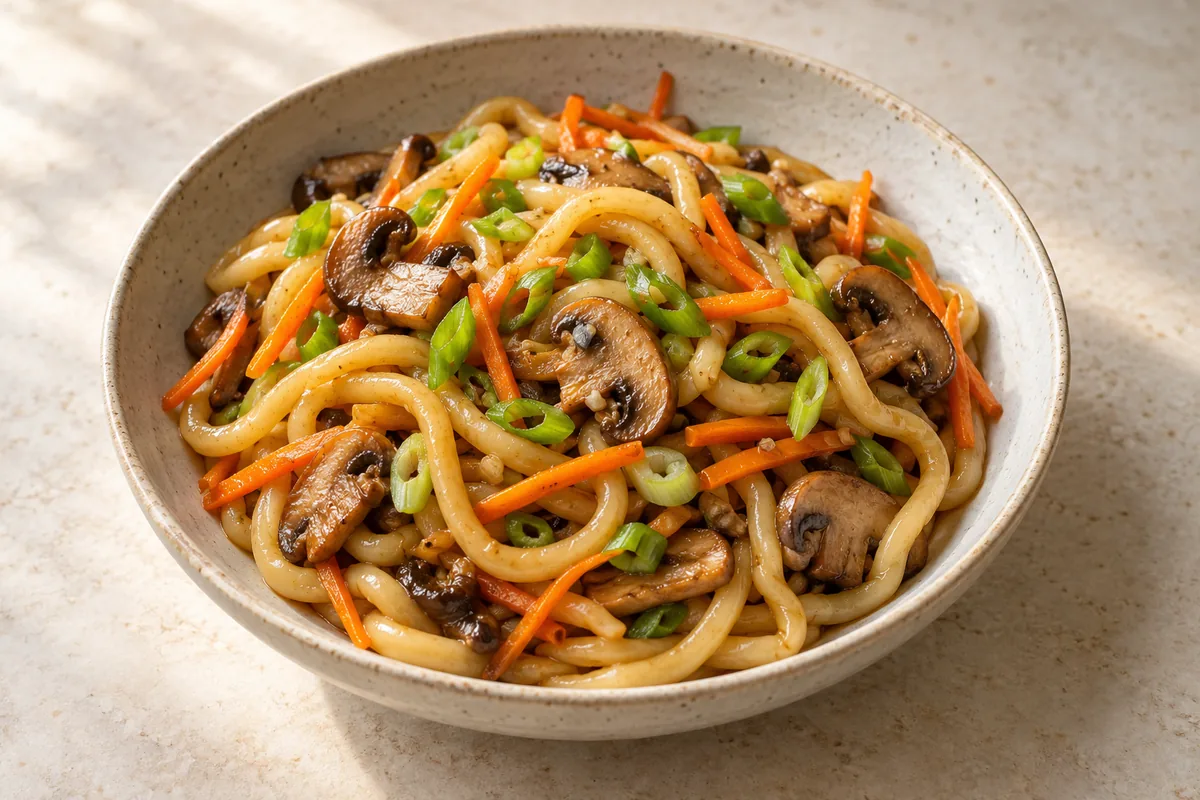
Mushroom udon stir-fry
Thick udon noodles with browned mushrooms and a simple soy sauce. A 20-minute dinner using refrigerated or frozen udon.