Stir-fry frozen vegetables with ginger-soy sauce
Cook plain frozen stir-fry vegetables without thawing in a dry, uncrowded wok or skillet over medium-high heat until the released water evaporates. Then add the oil, ginger and garlic, and finish with a cornstarch-thickened soy sauce. A 12-ounce batch takes about 8–10 minutes at the stove.
Recipe draft · Not yet kitchen-tested. How we develop recipes.
Stir-fry frozen vegetables with ginger-soy sauce
- Prep
- 8 min
- Cook / rest
- 10 min
- Total
- 18 min
- Serves
- 2
Ingredients
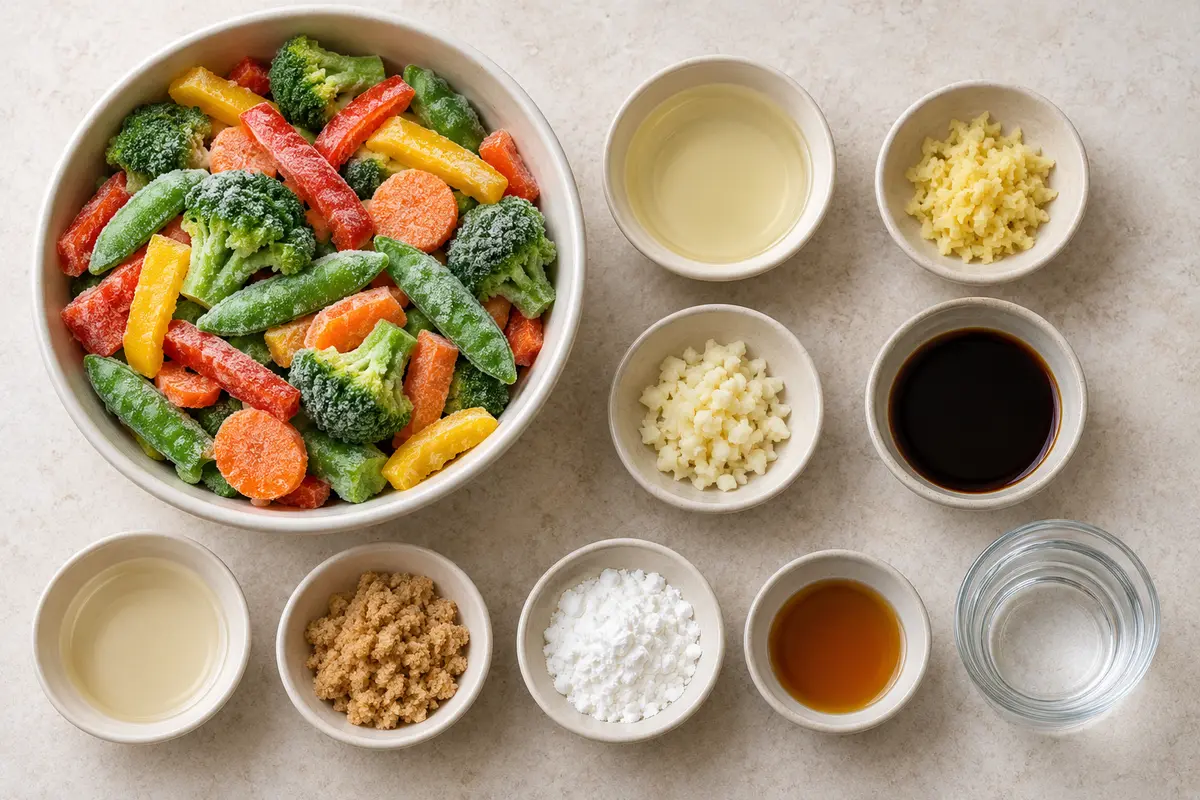
Use the listed quantities. Spoon measurements are standard measuring spoons.
Method
- Read the vegetable package first and follow any stricter cooking requirement. Use a plain, unsauced mix and keep it frozen. Break loose clusters by tapping the closed bag gently on the counter; do not try to cut a rock-hard frozen block with a knife. Whisk the soy sauce, water, rice vinegar, brown sugar, cornstarch and sesame oil in a small bowl until no dry starch remains.
- Heat a seasoned 13.5-inch flat-bottom wok or a wide 12-inch skillet over medium-high heat for 1–2 minutes, until hot but not smoking. Add the frozen vegetables carefully, with the pan facing away from you in case loose ice spits. Do not add oil yet. Spread the vegetables into the loosest layer the pan allows and leave them for 1 minute.
- Stir-fry for another 4–6 minutes, letting steam escape, until the ice is gone, no water pools in the bottom and the vegetables are hot throughout. Broccoli stems and thick carrot slices should be crisp-tender, not cold or hard. Remove thinner pepper strips or snap peas to a clean plate if they are ready before the dense pieces. If 12 ounces form a deep mound in your pan, cook two 6-ounce batches through this moisture-evaporation stage, then combine them.
- Reduce the heat to medium. Push the vegetables up the sides or to one half of the pan. Add the neutral oil to the cleared hot surface, followed by the ginger and garlic. Stir the aromatics in the oil for 20–30 seconds, just until fragrant; do not let the garlic brown.
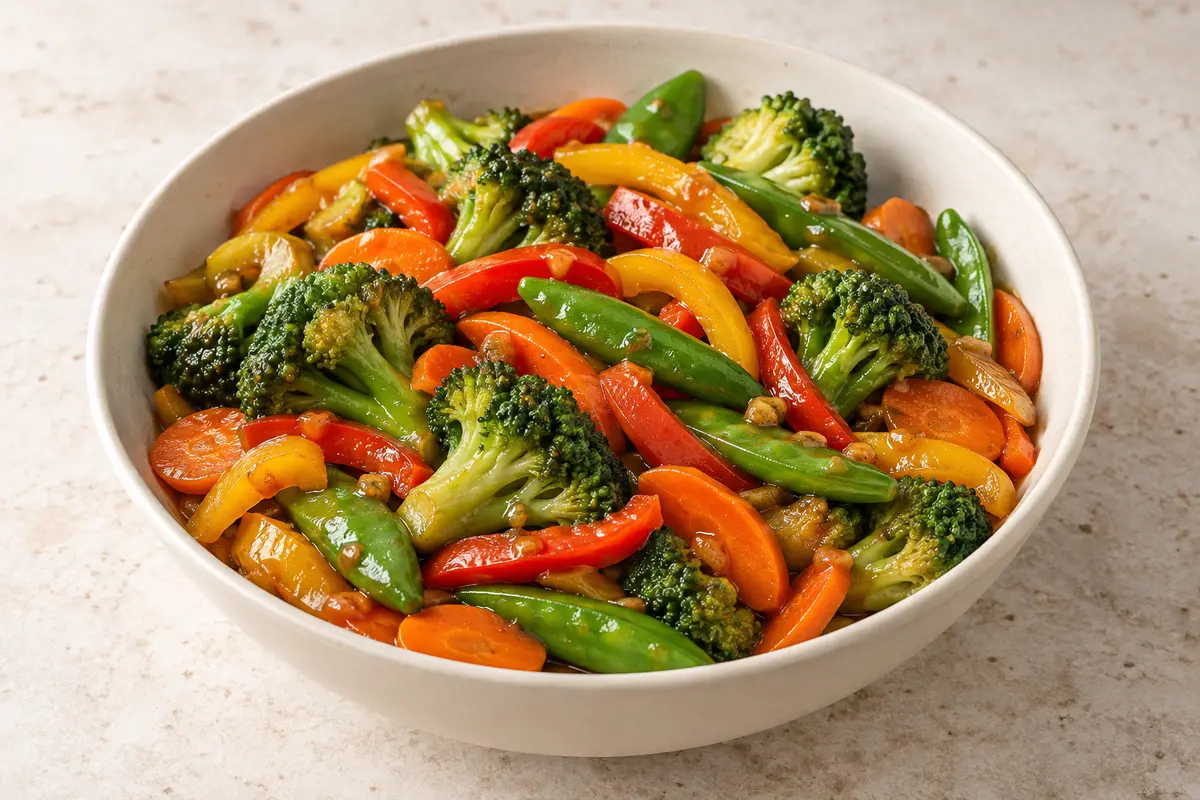
- Return any early-finished vegetables to the pan. Re-whisk the sauce, pour it over the vegetables and toss for 45–90 seconds, until it bubbles, turns glossy and lightly coats the pieces. If the sauce tightens before everything is coated, add water 1 teaspoon at a time. Serve immediately; extra standing time softens the vegetables.
Equipment that helps
A seasoned 13.5-inch flat-bottom wok or wide 12-inch skillet, heatproof spatula, small mixing bowl, whisk, measuring spoons and a clean plate for early-finished pieces.
The YOSUKATA 13.5-inch flat-bottom carbon steel wok Sponsored gives this 12-ounce batch a broad pan with sloped sides for stirring while moisture escapes. Frozen vegetables pull heat from the pan quickly, so keep the batch small and maintain the carbon-steel seasoning as the maker directs. A wide, stove-compatible skillet you already own works too.
Cooking notes & substitutions
Frozen vegetables turn watery when oil and sauce go into the pan before their surface ice has melted and evaporated. This small-batch method cooks a plain frozen mix in a dry, uncrowded wok first, then adds the oil and aromatics, and thickens the sauce only at the end. Mixed vegetables still finish at different speeds, so use the doneness cues rather than one rigid minute mark. The method has been reviewed for cooking logic but has not been kitchen-tested.
Food-safety references
- Birds Eye: frozen-vegetable stir-fry collection and batch guidance
- FoodSafety.gov: safe chilling and clean cooking practices
- FoodSafety.gov: storing and reheating leftovers
Why the oil goes in later
A frozen mix releases water as it heats. Evaporating that water before adding oil and sauce prevents a thin puddle from diluting the seasoning. The vegetables will be crisp-tender rather than identical to fresh wok-seared vegetables; freezing changes their cell structure.
Ice clumps and mixed sizes
Do not rinse or thaw the bag. Separate softened clusters with a spatula after a few minutes. Thin peppers and snap peas can finish before large broccoli stems or carrot coins, so remove the ready pieces briefly instead of overcooking the whole mix for the largest piece.
Watery or overly thick sauce
If liquid still pools before the aromatics go in, keep stir-frying the vegetables without sauce. Re-whisk the cornstarch mixture immediately before pouring because starch settles. If the finished coating is too thick, loosen it with water 1 teaspoon at a time; if it stays thin, let it bubble for another 20–30 seconds.
Choose a plain vegetable bag
This recipe is for an unsauced mix of broccoli, bell pepper, carrot and snap peas. Steam-in-bag products, seasoned vegetables, cauliflower rice and mixes with noodles need their own package method. A mix with water chestnuts or baby corn can work, but its larger pieces may change the timing.
Substitutions and allergens
Tamari can replace the soy sauce one-for-one; use certified gluten-free seasonings and a plain vegetable bag if needed. White vinegar can replace the rice vinegar one-for-one. For sesame-free cooking, replace the toasted sesame oil with ½ teaspoon neutral oil. These are suggested swaps, not kitchen-tested variations.
Storage and reheating
For the best texture, cook only what you plan to eat. Refrigerate leftovers promptly in a shallow covered container and use within 3–4 days. Reheat in a wide pan until the center of the portion reaches 165°F / 74°C; the vegetables will be softer than when first cooked.
Questions before you cook
Can I stir-fry any frozen vegetable mix?
Use a plain unsauced mix with firm, similarly sized pieces. Broccoli, bell pepper, carrot and snap peas suit this method. Leafy spinach, cauliflower rice, steam-in-bag vegetables and mixes containing noodles or sauce release moisture or cook differently; follow their package directions instead.
Leftovers & food safety
Refrigerate leftovers promptly in shallow containers. Do not leave cooked food at room temperature for more than 2 hours, or 1 hour above 90°F / 32°C. Reheat leftovers to 165°F / 74°C. Follow package instructions and use a thermometer where appropriate. USDA leftover guidance.
Serve with or try next
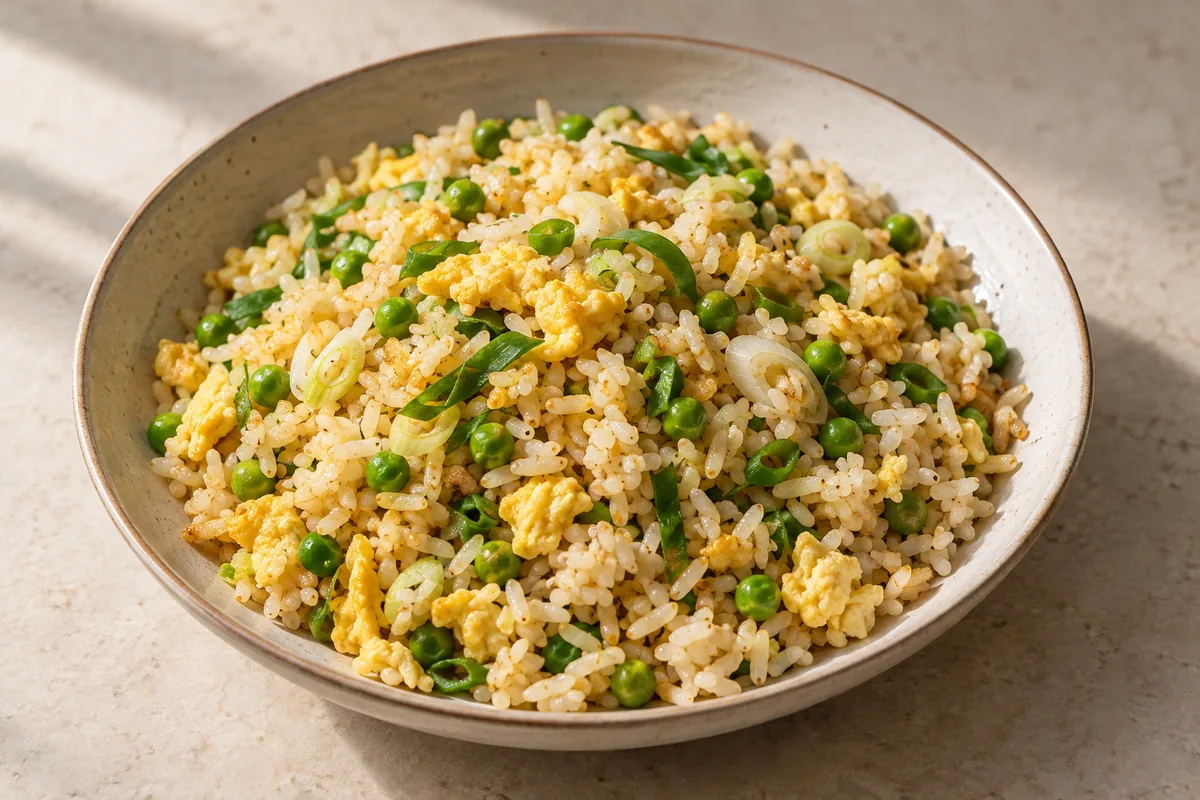
Small-batch egg fried rice
Egg fried rice for a home stove: dry grains, a hot flat-bottom pan, and small batches that brown instead of steam.
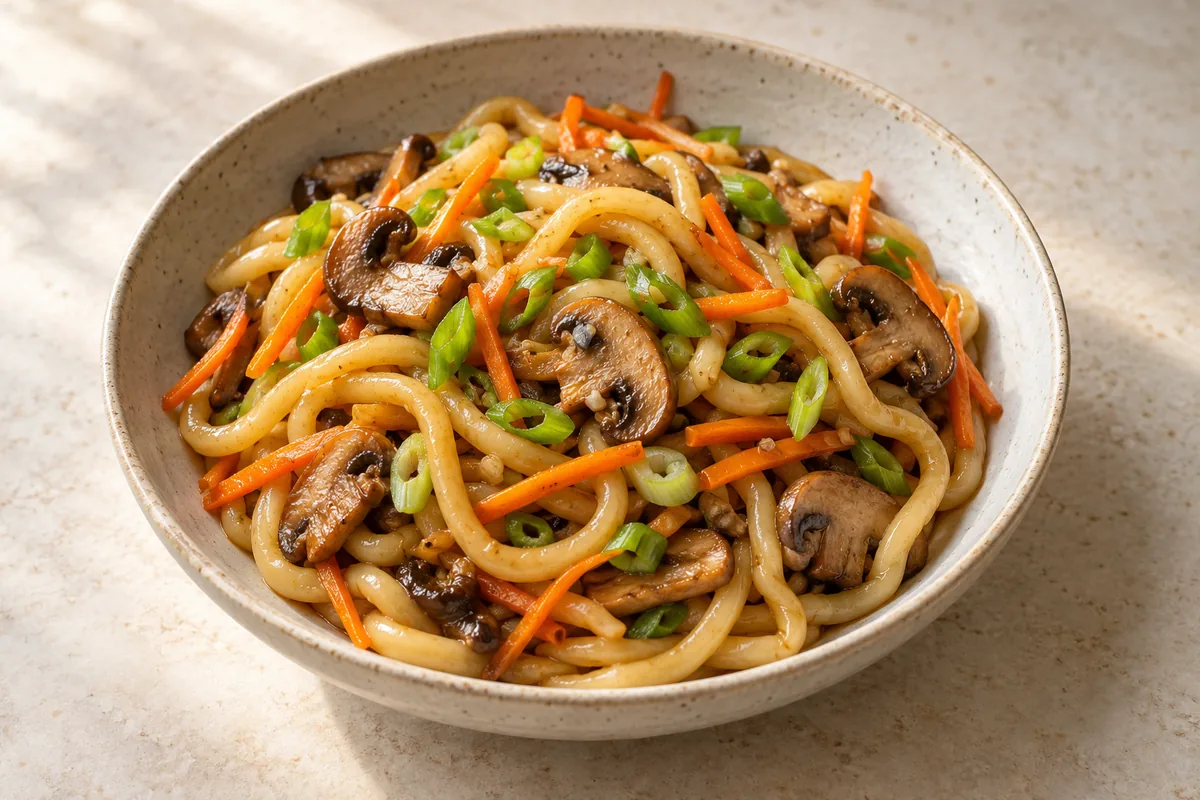
Mushroom udon stir-fry
Thick udon noodles with browned mushrooms and a simple soy sauce. A 20-minute dinner using refrigerated or frozen udon.
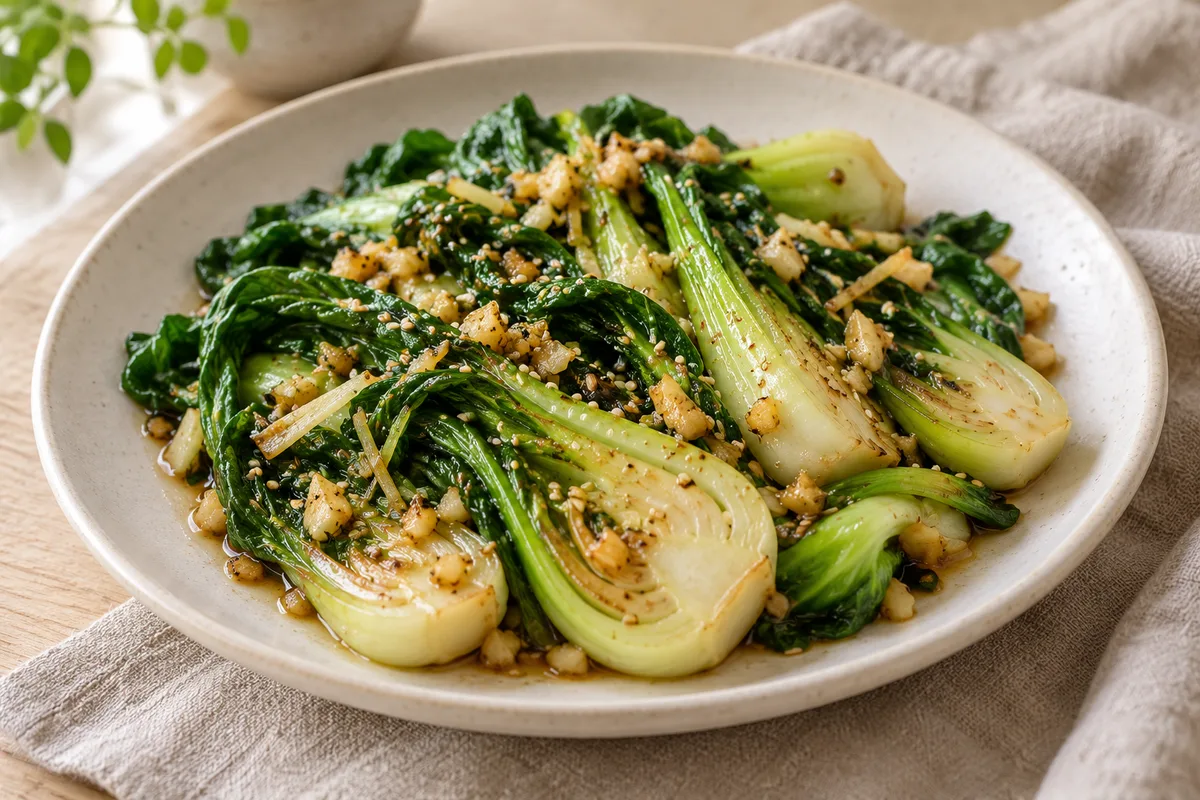
Bok choy stir fry with ginger and garlic
A 15-minute bok choy stir-fry with crisp stems, wilted leaves, ginger, and garlic. A simple side for rice and noodles.